Why Albuquerque Is the Most Underrated Travel Destination in America
Ask most Americans to name the cities they most want to visit and Albuquerque rarely appears in the top ten — or the top twenty. Santa Fe gets the art-world attention. Phoenix gets the golf tourism. Sedona gets the wellness crowd. Albuquerque, sitting in the middle of everything, tends to get overlooked. This is a significant collective mistake, and it is one that people who have actually spent time here are consistently baffled by.
The Light
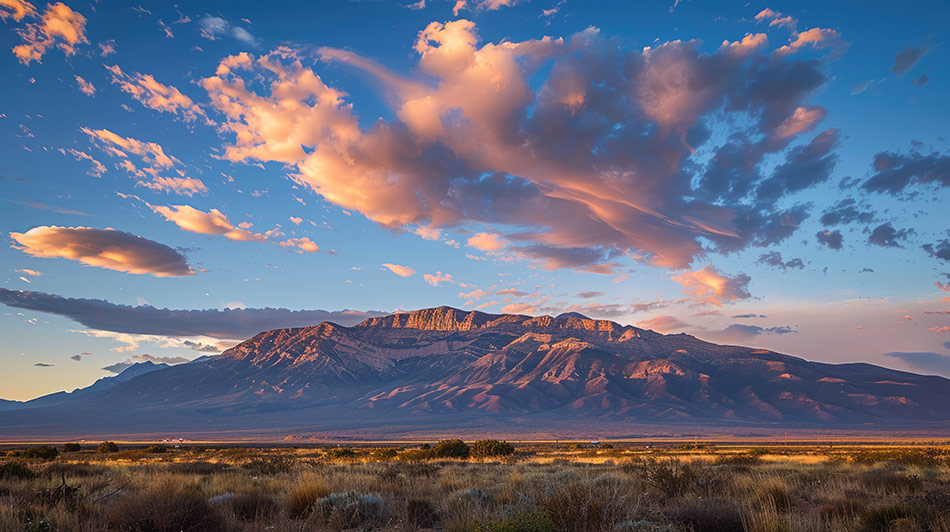
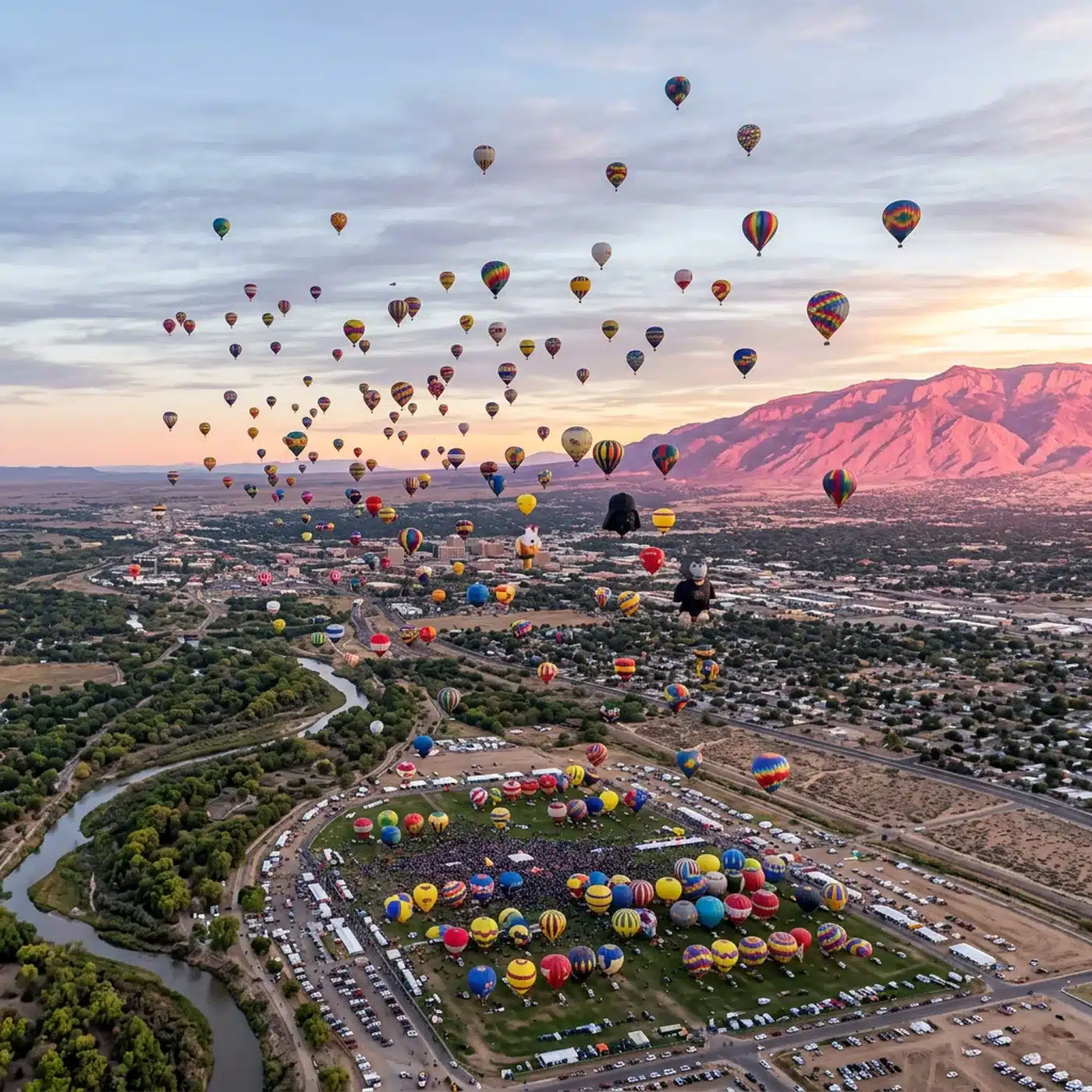
Everything in Albuquerque starts with the light. At 5,312 feet elevation, the air is thin and the light is intense — a quality that painters, photographers, and anyone who has ever stood outside at golden hour here can attest to. The Sandia Mountains to the east change color throughout the day in ways that legitimately stop you mid-sentence. At sunset they go pink, then watermelon, then deep magenta — the phenomenon is called the “Watermelon Mountains” effect, and it happens nearly every evening. You don’t stop noticing it.
The Food
New Mexico cuisine is one of the most distinctive regional food traditions in the country, and Albuquerque is where it is most widely and authentically available. Green and red chile — grown here, roasted here, eaten here in ways that have barely changed in centuries — is on nearly every table. The breakfast burrito smothered in green chile is a genuine cultural artifact. Sopapillas with honey. Posole. Tamales at Christmas. The food here is not performing for tourists — it is what people actually eat, and it is excellent.
The Culture
Albuquerque sits at the intersection of three deep cultural traditions: Pueblo Native American, Hispano/Nuevomexicano, and Anglo American. Each has left architectural, culinary, artistic, and linguistic marks on the city that are visible in daily life. Old Town, founded in 1706, is surrounded by galleries that sell genuine Native and Hispano art alongside contemporary work by artists who have chosen this place deliberately. The Indian Pueblo Cultural Center is one of the most important cultural institutions in the American West.
The Outdoors
Within 45 minutes of downtown Albuquerque: the summit of the Sandia Mountains (10,378 feet, accessible by tram); the Rio Grande bosque and its 16-mile trail system; Petroglyph National Monument with 24,000 ancient rock carvings; the Jemez Mountains with hot springs, red rocks, and mountain meadows; and the beginning of the Turquoise Trail to Santa Fe. The outdoor access from this city is extraordinary for an urban area of its size.
The Events
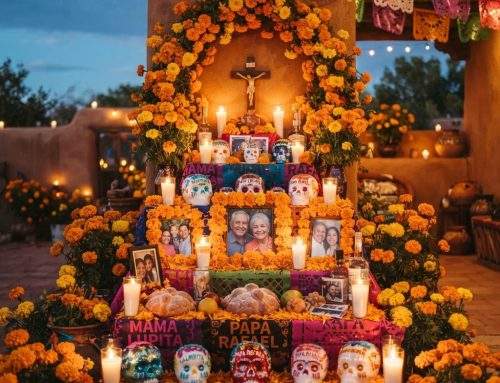
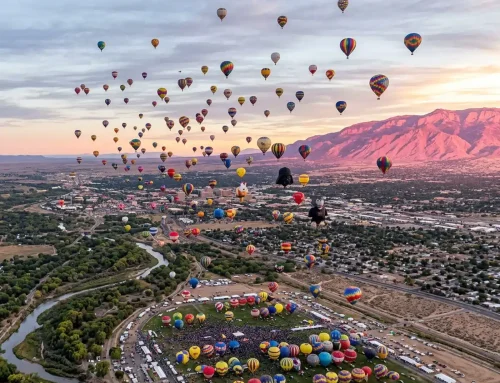
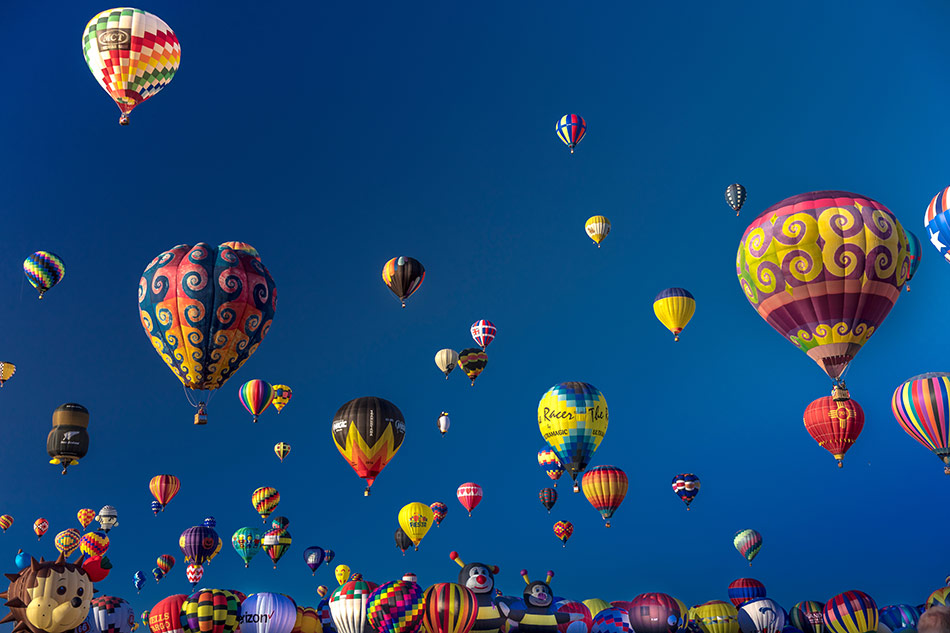
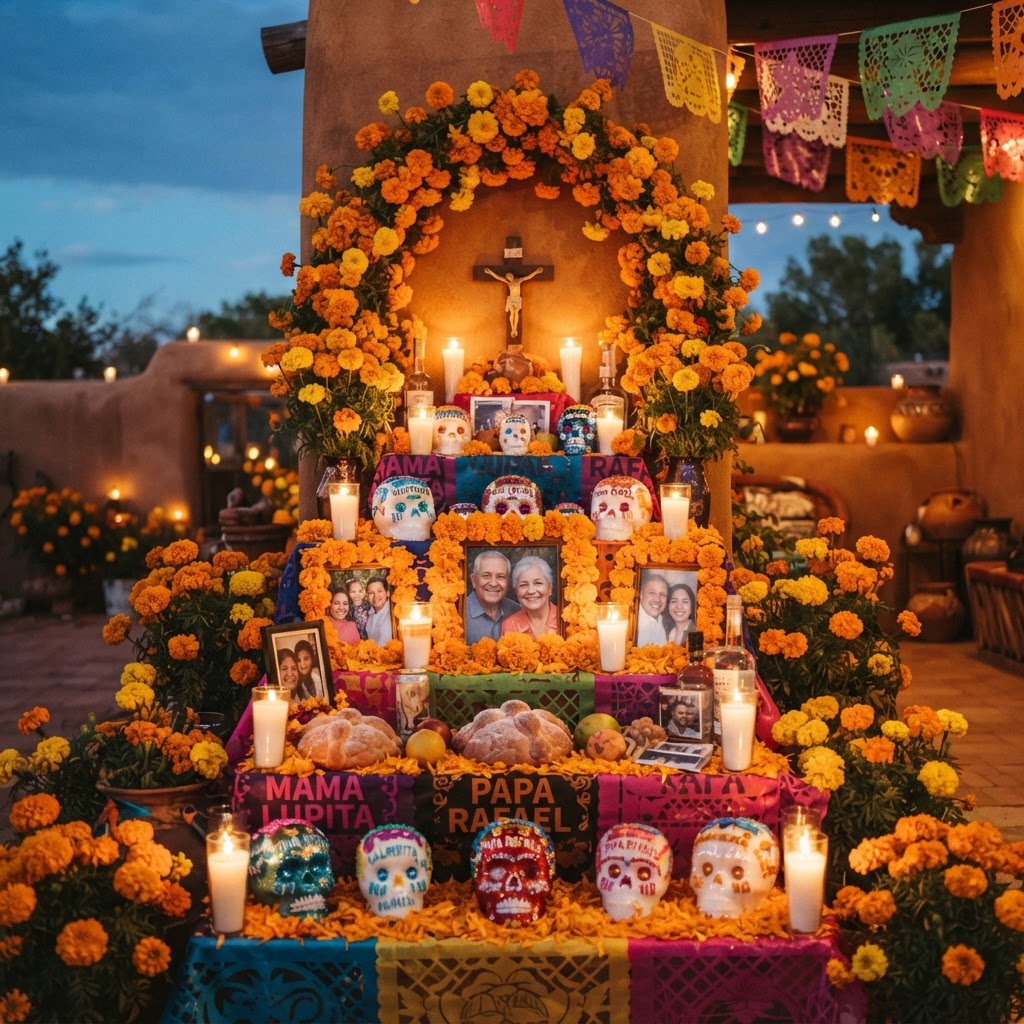
The Balloon Fiesta alone — 500 balloons, nine days, October — would justify a visit. Add the Gathering of Nations Powwow (largest in North America), Festival Flamenco Alburquerque (world-class), the New Mexico State Fair, Día de los Muertos in Old Town, and a summer concert calendar that ranges from free neighborhood series to major amphitheater acts, and Albuquerque has a cultural events calendar that cities twice its size would envy.
Where to Stay
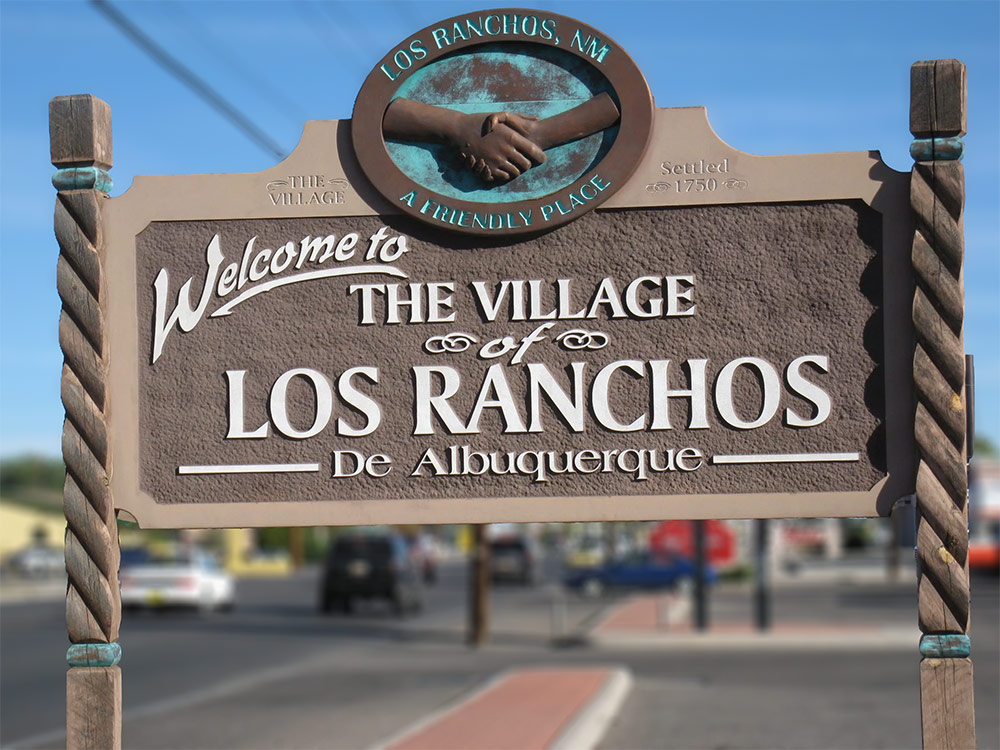
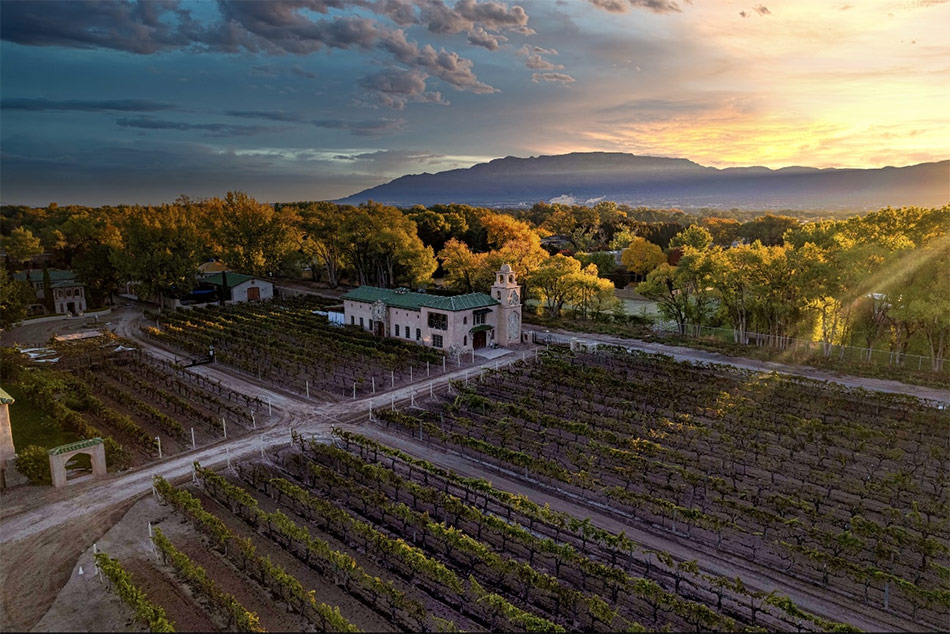
The right accommodation makes all the difference in how a city reads. Santuario Grande in Los Ranchos de Albuquerque offers something the hotel district cannot: a private casita in a cottonwood-shaded garden, 15 minutes from everything, quiet enough to hear the birds in the morning. It is the kind of place that makes you understand why people choose Albuquerque not just to visit, but to stay. Reserve your casita.